

If you’ve been in trucking the past couple of years, you already know—it hasn’t been easy.
Rates dropped. Fuel stayed unpredictable. And finding consistent, profitable loads felt like more work than ever.
So, the big question right now is:
Is the freight market finally turning around… or is this just a temporary pause?
Let’s break down what’s happening and what it means for your trucking business.
⚠️ Are trucking rates going up in 2026?
Trucking rates in 2026 are showing early signs of stabilization after a prolonged downturn. While spot rates remain volatile, tightening capacity and rising costs are beginning to put upward pressure on pricing in certain lanes, but a full recovery has not yet arrived.
📉 Freight Market 2026: Where Trucking Rates Stand Today
Over the past year, the trucking industry has been dealing with a classic cycle:
- Too much capacity (too many trucks chasing too few loads)
- Lower spot rates
- Higher operating costs cutting into margins
The good news? We’re starting to see some shifts.
Many smaller carriers have exited the market due to rising costs and tight cash flow. That’s slowly reducing capacity, which is exactly what needs to happen before rates improve.
👉 Translation: Less competition means more pricing power for carriers.
📊 Spot Rates vs Contract Rates in 2026: Key Trends to Watch
Right now, we’re seeing a mixed picture:
Spot Rates
- Still relatively low compared to peak years
- Showing small, gradual improvements in some lanes
- Highly volatile depending on region and demand
Contract Rates
- More stable, but still adjusting downward in some sectors
- Shippers are being cautious with long-term commitments
For owner-operators and small fleets, this means:
👉 You may seebetter opportunities popping up—but they’re not consistent yet.
🚛 Trucking Capacity Is Tightening: Why This Matters for Freight Rates
One of the biggest signals of a market shift is excess capacity leaving the industry. This is due to factors such as:
- Low freight rates
- Higher insurance costs
- Expensive equipment financing due to higher interest rates
- Rising maintenance bills
- Slow-paying brokers
All of this has pushed some carriers out.
While that’s tough to see, it creates a more balanced market over time.
When capacity drops, rates typically trend upwards.
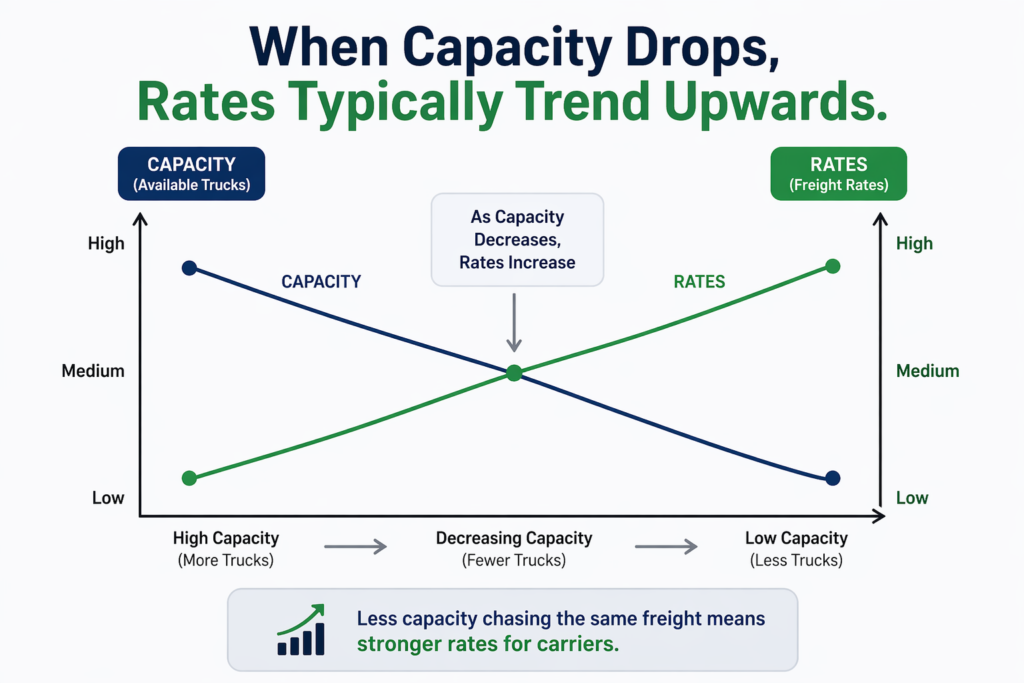
The key word here is typically—not immediately.
👉 What this means: Carriers who stay operational through this phase will be best positioned when rates recover.
🔄 Freight Market Outlook 2026: Is a Recovery Underway?
Short answer: Not quite yet, but it seems to be moving in the right direction.
What we’re seeing right now is more of a stabilization phase than a full rebound.
Signs pointing toward improvement:
- Slight increases in load volumes in certain regions
- Capacity tightening
- Seasonal demand starting to pick up
But challenges are still here:
- Rates aren’t back to profitable levels for everyone
- Costs are still high
- Payment delays continue to hurt cash flow
💡 Trucking Industry Strategies: What Top Carriers Are Doing in 2026
The carriers that are surviving and doing well right now aren’t waiting for the market to shift, they’re adjusting to it.
Here’s what they’re focusing on:
1. Being Selective With Loads
Not every load is worth taking. Running cheap freight just to stay moving can hurt more than help. Conversely, loads paying unusually high rates often signals risk, such as unreliable brokers or delayed payments, so it’s important to vet opportunities carefully. That broker may be offering higher rates to attract carriers—but that doesn’t always mean they’re reliable or will pay on time. That great rate is often a big red flag!
2. Watching Cash Flow Closely
Even profitable companies struggle when payments take 30–60 days. And Quick-Pay options can be expensive and you still need to wait several days to get paid.
3. Building Broker Relationships
Reliable brokers = fewer surprises and faster payments.
4. Staying Flexible
Markets vary by region. Being open to different lanes can open up better-paying opportunities. Make sure you have access to load boards
💸 The Hidden Challenge: Cash Flow in a Slow Market
Here’s something a lot of trucking companies are dealing with right now:
Even when you do find a good load…
you still have to wait to get paid.
And in a tighter market, that delay can:
- Limit how many loads you can take
- Make it harder to cover fuel and repairs
- Prevent you from growing your fleet
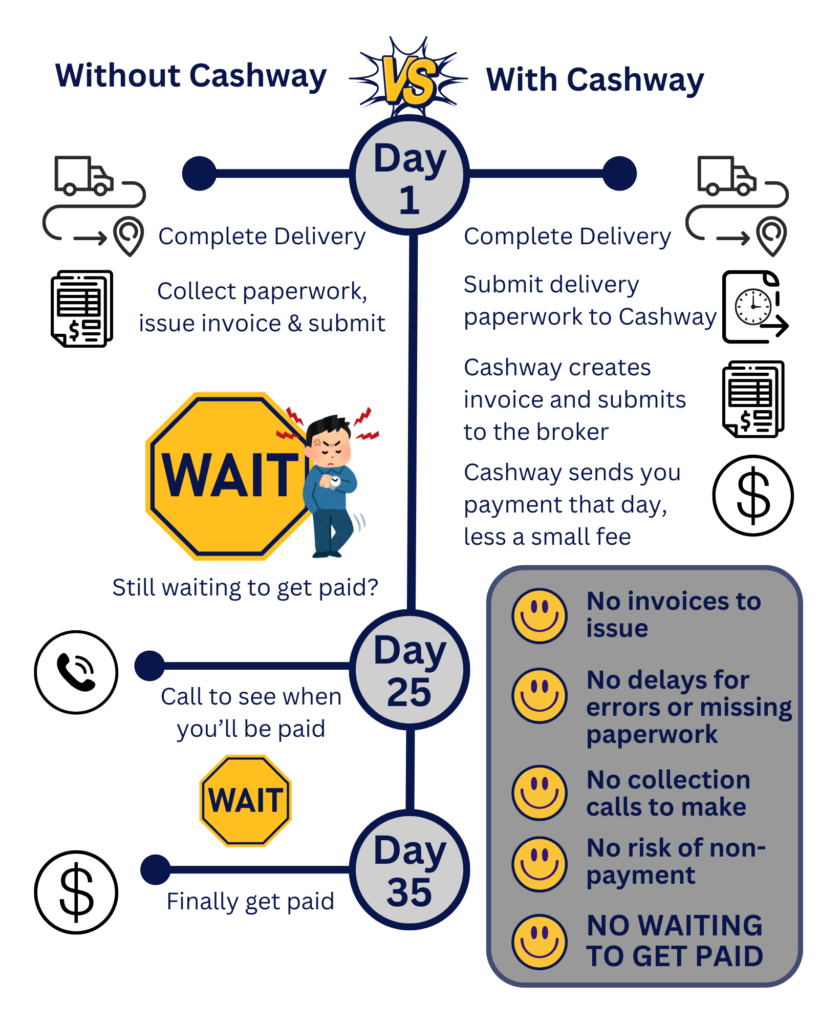
That’s why many carriers are turning to tools like freight bill factoring, not as a last resort, but as a way to stay steady during uncertain times. Rather than waiting 30 days or more to get paid or paying a hefty fee for a QuickPay that’s not particularly fast, invoice factoring immediately releases payment for a load as soon as it’s been delivered. Plus the carrier shouldn’t have to deal with creating and submitting invoices to the broker as the factor does all that for them.
🌍 Global Uncertainty Is Adding Another Layer of Risk
On top of normal freight cycles, there’s something else impacting the market right now: global economic uncertainty, especially tied to rising tensions in the Middle East.
Recent events involving Iran have already started to affect energy markets, and that matters directly to trucking.
- Oil prices have surged; rising to $100 or more per barrel at times due to supply concerns
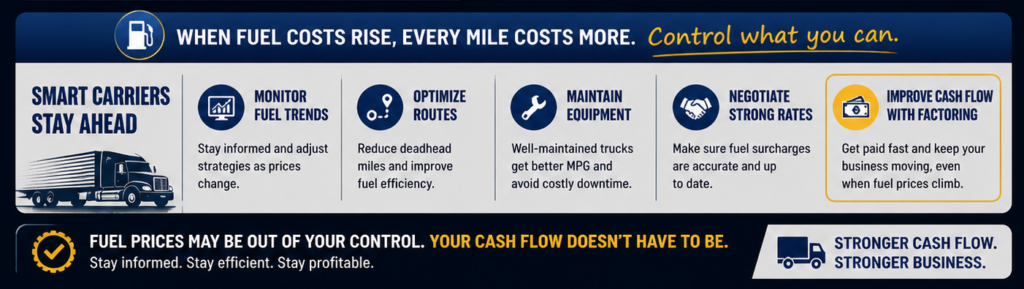
- Diesel prices have climbed, increasing operating costs across the industry
- Some companies are already shifting freight to rail to offset fuel costs
The bigger concern isn’t just today’s fuel prices; it’s the uncertainty going forward. When will this conflict be resolved and at what cost?
Disruptions in key shipping routes like the Strait of Hormuz, which handles 20-25% of the global oil supply, can quickly tighten availability and push prices higher.
And when fuel prices rise, the effects ripple outward:
- Higher transportation costs → higher prices on goods
- Rising inflation across the economy
- Pressure on interest rates to stay higher for longer
- Slower economic growth and an increased recession risk
Economists and institutions like the IMF have warned that sustained energy price spikes generally increase inflation while slowing overall growth.
There’s also a direct impact on trucking recovery. Industry leaders have already pointed out that rising fuel costs and any resulting recession tied to the Iran conflict could delay a full freight rebound in 2026.
What this means for trucking companies:
Even if freight demand improves, external factors like fuel costs and economic pressure could limit how fast things recover.
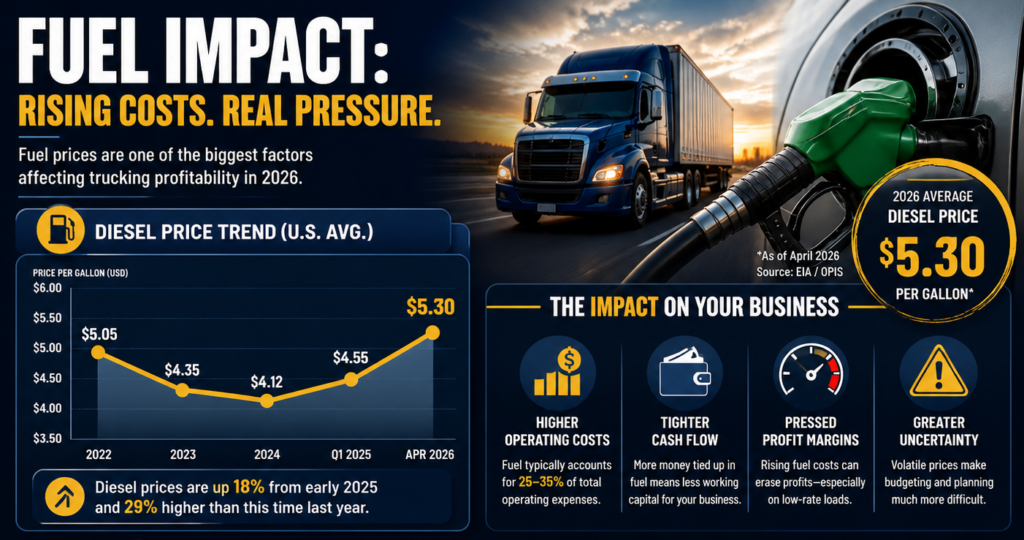
👉 Bottom line: Even if demand improves, rising fuel costs could slow how quickly rates rebound.
🔮 What to Expect Over the Next 6 Months
While no one has a crystal ball, here’s what many in the industry are watching:
- Gradual rate improvement (not a sudden spike)
- Continued capacity tightening
- Seasonal demand giving short-term boosts
- Ongoing pressure from operating costs
👉 In other words: A slow climb back and not a quick bounce.
🚛 Final Thoughts
The freight market isn’t fully back to where we’d like it to be, but it’s no longer in freefall either.
For trucking companies, this is a transition period.
Those who manage costs, protect cash flow, and stay flexible will be in the best position when rates do improve. And when they do…
You want to be ready—not playing catch-up.
💡Freight Market FAQ

Are freight rates expected to rise in 2026?
Short answer: yes, but very gradually.
Why are trucking rates still low?
Trucking rates are still under pressure due to excess capacity in the market, with more trucks than available freight in many regions. At the same time, cautious shipper behavior and slower economic growth have limited demand, keeping spot rates volatile and preventing a full recovery.
What is the difference between spot and contract rates?
Spot rates are short-term, market-driven prices that fluctuate daily based on supply and demand, while contract rates are pre-negotiated, long-term agreements between shippers and carriers that offer more stability and predictable revenue. Trucking companies often rely on a mix of both to balance flexibility with consistent cash flow. According to industry data from sources like DAT and FreightWaves, spot rates are remaining below long-term averages.
How can trucking companies manage cash flow in a slow market?
Trucking companies can manage cash flow in a slow market by improving payment speed and controlling expenses. Tools like invoice factoring for trucking companies help turn unpaid invoices into immediate cash, while fuel discounts, careful load selection, and working with reliable brokers like Trinity Logistics can reduce costs and protect margins during uncertain freight conditions.
If your biggest challenge right now is making sure you are going to get paid quickly for the loads you run, you’re not alone. By using a specialist factoring company trusted by truckers like Cashway Funding, you can help keep your trucks moving with fast, reliable cash flow.
For carriers working with brokers like Trinity Logistics, partnerships like the one between Cashway and Trinity can also offer more competitive factoring rates on those loads, helping improve overall margins.
Additional benefits like fuel discounts for truckers and credit protection through non-recourse factoring programs ensure you can focus on finding the right loads, not chasing payments or risking bad debt.
👉 Learn more about our freight factoring for truckers and get started today by completeing the Contact Us form on this page
We offer reduced rates for all Trinity Logistics loads hauled!!
👉 Apply for factoring today and start getting paid faster »
There is no obligation in filling out our start up kit.
👉 Start saving on diesel with the Cashway PowerCard »
You can apply here for a card even if you aren’t a Cashway client, but you won’t automatically qualify for the credit line.

Related Articles:
Top 10 Pain Points Truckers Face (and How Cashway Helps Solve Them)
Why Non-Recourse Factoring for Trucking Companies Matters in an Unpredictable Freight MarketUnderstanding your Factoring Agreement: Why it Matters